


Food-Safe Self-Sealing Bags: Understanding FDA, LFGB, and EU 10/2011 Standards
Back to previous pageWhy Food-Grade Certification Matters for Plastic Self-Sealing Bags
When self-sealing bags are used to store, transport, or display food products, the safety of the polymer film is non-negotiable. Whether the bag is filled with dried fruit in a supermarket, used for meal prep at home, or packed with pharmaceutical-grade ingredients, regulatory compliance ensures the packaging does not contaminate the contents. For B2B buyers sourcing resealable plastic bags, understanding the three major international food-contact standards — FDA (United States), LFGB (Germany / European Union), and EU Regulation 10/2011 — is essential to avoid customs rejections, product recalls, and brand damage.

FDA 21 CFR — The U.S. Food and Drug Administration Standard
In the United States, plastics intended for food contact are regulated under FDA 21 CFR Parts 170-199. For polyethylene self-sealing bags, the most relevant sections are:
- 21 CFR 177.1520 — Olefin polymers (LDPE, LLDPE, HDPE): establishes extraction limits when the film is exposed to food under various temperature conditions.
- 21 CFR 174.5 — General principles for food-contact articles, requiring that no constituent migrates into food at levels harmful to health.
Manufacturers supplying to U.S. food brands must provide a FDA Compliance Letter or certificate of conformity for each resin grade used. Virgin LDPE and HDPE bags produced without recycled content are typically FDA-compliant by default; however, bags containing post-consumer recycled (PCR) material require additional migration testing.
EU Regulation 10/2011 — The European Union Framework
The EU's Regulation (EU) No 10/2011 governs plastic materials and articles intended to come into contact with food. Unlike the FDA's substance-list approach, EU 10/2011 specifies:
- An overall migration limit (OML) of 10 mg/dm² of food-contact surface.
- A specific migration limit (SML) for each authorized additive, evaluated per substance.
- Mandatory Declaration of Conformity (DoC) documentation stating the resin, additives, and applicable restrictions.
For self-sealing bags exported to the EU market, suppliers must supply a DoC and ensure the bag has passed migration testing with food simulants (e.g., 10% ethanol for aqueous foods, 3% acetic acid for acidic foods, vegetable oil for fatty foods).
LFGB — Germany's Stricter National Standard
Germany's Lebensmittel- und Futtermittelgesetzbuch (LFGB) is widely regarded as the strictest food-contact standard in Europe. While EU 10/2011 sets the baseline, LFGB requires additional odor and taste transfer testing — the bag must not impart any detectable smell or flavor to the food. Many German retailers and private-label brands require LFGB certification even for products sold in other EU countries.

How Buyers Should Verify Compliance
When sourcing food-safe self-sealing bags, B2B buyers should request the following documentation from suppliers:
- FDA compliance letter or 21 CFR citation for U.S. shipments.
- EU 10/2011 Declaration of Conformity with full additive disclosure.
- LFGB test report from an accredited lab (e.g., SGS, TÜV, Intertek) when supplying to Germany or premium EU retailers.
- Migration test results using food simulants appropriate to the intended end use.
- Production batch traceability — every production lot should be linkable to a specific resin supplier and date.
Common Pitfalls to Avoid
Several issues repeatedly cause compliance failures in self-sealing bag imports:
- Recycled-content confusion: PCR bags are not automatically food-safe and require additional testing.
- Ink migration: Custom-printed logos or branding must use food-contact-grade inks, not standard industrial inks.
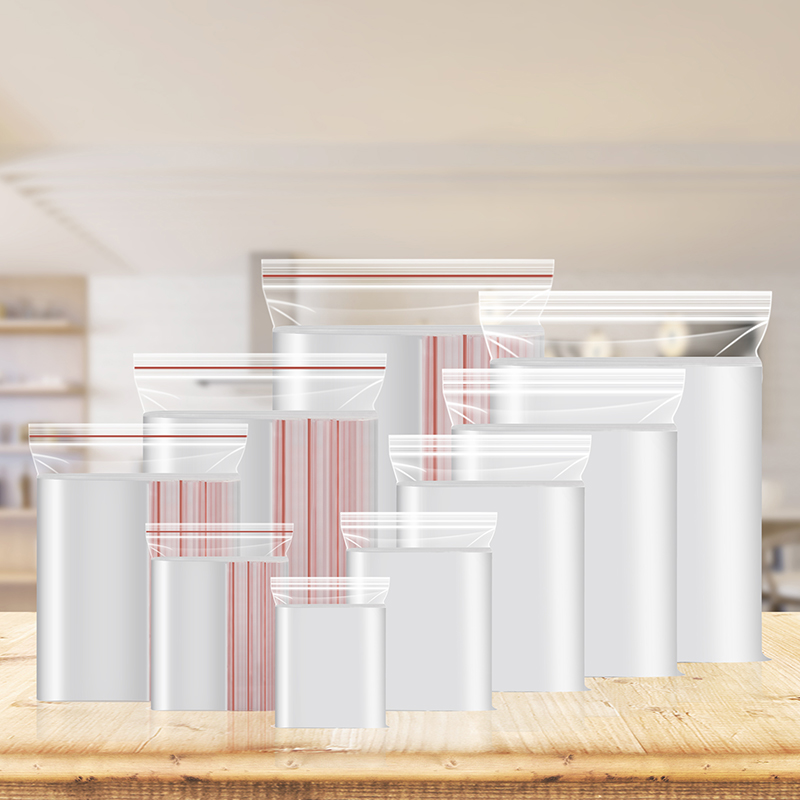
- Zipper colorants: Colored zippers (especially bright reds, yellows) may contain heavy-metal pigments restricted under EU 10/2011 Annex II.
- Documentation gaps: A supplier's general "food-grade" claim without test reports is not acceptable evidence.
Conclusion
Food-safe self-sealing bags are not a single global standard — they are a layered set of regulations that vary by destination market. For international B2B buyers, working with a manufacturer that holds FDA, EU 10/2011, and LFGB certifications simultaneously simplifies compliance across multiple regions. At YDF Packaging, all food-contact self-sealing bags are produced under strict quality protocols, with full documentation available for every shipment.
-
Contact Us
 Learn moreTel: +86-15602809087 Water Yang
+86-15815931682 Helena He
-
Product Category
-
COMPANY
-
LET'S STAY IN TOUCH


