

PE vs PP Self-Sealing Bags: Material Comparison for Industrial Applications
Back to previous pageWhen selecting self-sealing bags for industrial and commercial use, understanding the differences between polyethylene (PE) and polypropylene (PP) materials is crucial. Both materials offer distinct advantages that make them suitable for different applications, and choosing the wrong material can lead to packaging failures, product damage, or unnecessary costs.
Polyethylene (PE) Self-Sealing Bags
PE is the most widely used material for self-sealing bags, and for good reason:
- Flexibility: PE bags are highly flexible and conform to the shape of the contents, making them ideal for irregularly shaped items. This flexibility also makes them easier to open and reseal repeatedly.
- Moisture resistance: PE provides excellent moisture barrier properties, protecting contents from humidity, rain, and condensation during storage and transit.
- Cost efficiency: PE is generally less expensive to produce than PP, making it the preferred choice for high-volume packaging where cost control is a priority.
- Temperature range: Standard LDPE bags perform well between -40°C and 80°C, suitable for most ambient storage conditions.
Polypropylene (PP) Self-Sealing Bags
PP bags offer several advantages that PE cannot match:
- Higher clarity: PP bags are significantly more transparent than PE, allowing customers to see product details clearly. This makes PP the preferred choice for retail display packaging.
- Stiffness: PP bags maintain their shape better, standing upright on shelves for professional retail presentation. This rigidity also provides better structural protection for fragile items.
- Heat resistance: PP withstands higher temperatures (up to 120°C), making it suitable for applications involving heat exposure or hot-fill processes.
- Chemical resistance: PP offers superior resistance to many chemicals, oils, and solvents compared to PE.
Application Recommendations
Based on material properties, here are practical recommendations:
| Application | Recommended Material | Reason |
|---|---|---|
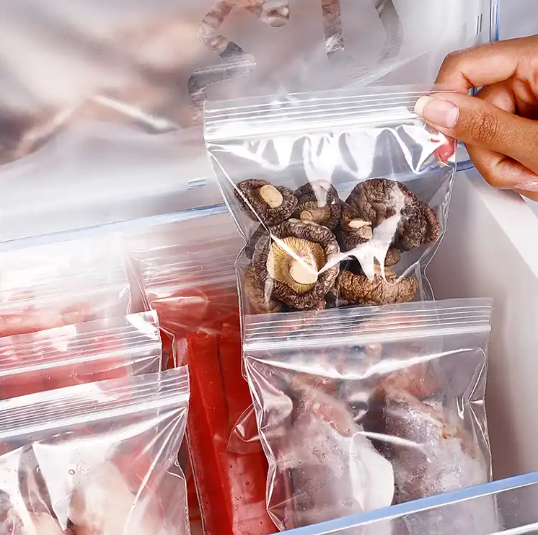
| Food storage | PE | Better flexibility and moisture seal |
| Retail display | PP | Higher clarity and shelf stability |
| Electronics protection | PE (anti-static) | Flexible protection with ESD options |
| Medical supplies | PP | Chemical resistance and clarity for inspection |
| Industrial hardware | PE (heavy-duty) | Puncture resistance and cost efficiency |
YDF Packaging manufactures both PE and PP self-sealing bags in various sizes, thicknesses, and configurations. Our engineering team can help you select the optimal material and specification for your specific application, ensuring both performance and cost-effectiveness.
For detailed material specifications and custom bag design, contact our technical team at info@ydfplastics.com.

-
Contact Us
 Learn moreTel: +86-15602809087 Water Yang
+86-15815931682 Helena He
-
Product Category
-
COMPANY
-
LET'S STAY IN TOUCH


