


Plastic Bag Thickness Explained: Micron, Mil, and Gauge for Self-Sealing Bag Buyers
Back to previous pageAsk three suppliers to quote the same ziplock bag and you will often receive three different prices. In many cases the difference is not the resin or the zipper profile - it is film thickness, quoted in units that buyers rarely use in daily work. Understanding micron, mil, and gauge makes quotations directly comparable and prevents costly over- or under-specification.
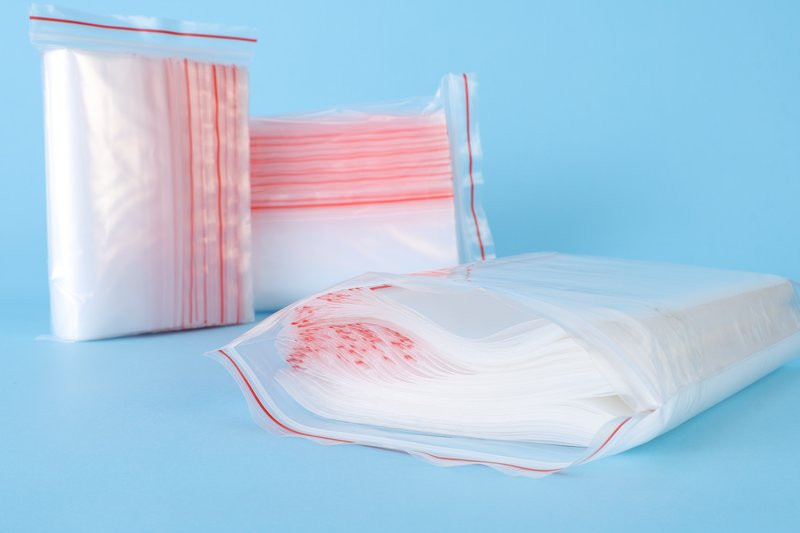
Micron, Mil, and Gauge: How the Units Convert
Film thickness is expressed in three common units. A micron is one thousandth of a millimetre and appears on most Asian factory specification sheets. A mil is one thousandth of an inch and remains standard in North American documentation; 1 mil equals 25.4 microns. Gauge is the oldest unit and still appears on trade platforms: 100 gauge equals 1 mil, so as a practical rule of thumb the gauge value is roughly four times the micron value. A 60 micron bag is therefore about 240 gauge, or 2.4 mil. Chinese suppliers also quote in "si", where one si equals 10 microns, so a 6-si self-sealing bag is built on 60 micron film.
What Thickness Actually Costs
Film is the single largest cost driver in a self-sealing bag, ahead of the zipper and any printing. Resin consumption scales almost linearly with gauge, so moving from 60 to 80 micron adds roughly one third to the material cost of the same bag size. That does not make thicker film wrong - it makes the decision commercial. The sensible target is the thinnest film that survives handling, sealing, and the weight of the contents with a safe margin.
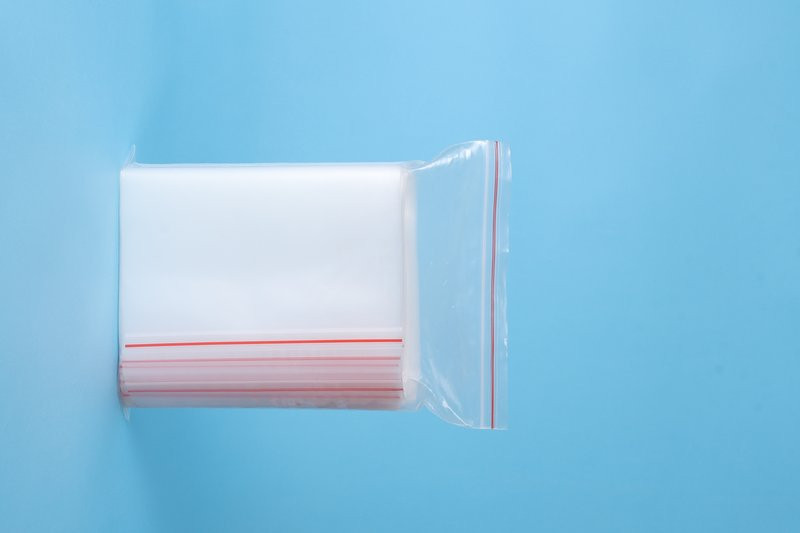
Matching Thickness to the Application
In practice most buyers land in a narrow range. Lightweight items such as jewellery, cards, and small hardware parts work well at 40-50 micron. General food storage, stationery, and electronics accessories sit comfortably at 60-80 micron, which balances stiffness against cost. Bags that face abrasion risk - fasteners, tools, or goods packed into cartons that shift in transit - justify 90-120 micron. For compression and vacuum-style storage bags, thickness matters less than seal width and puncture resistance, so it should be judged together with the closure rather than on its own.
How Gauge Is Controlled in Production
Thickness consistency depends on blown film extrusion. Die gap setting, bubble stability, and take-off speed determine whether a roll quoted as 60 micron actually averages 60 micron across its full width. A hands-on factory samples every roll with a micrometer at several points, holds batch tolerance within about plus or minus five percent, and records the readings against the order number. Buyers comparing suppliers should ask for that measurement record instead of accepting the nominal figure on a quotation.

When requesting a quote, state what the bag will hold, how heavy it is, and how it will be packed and shipped. A factory that runs its own film line can normally recommend a gauge that meets the requirement at the lowest workable cost - and adjust it quickly if your product changes.
-
Feb 09,2025
What material is the drug packaging bag made of?
view more -
Aug 03,2026
Post-Consumer Recycled (PCR) Content in Plastic Packaging: What Manufacturers and Buyers Need to Know in 2026
view more -

Aug 17,2026
Monomaterial Flexible Packaging Design: The Path to Truly Recyclable Plastic Bags
view more
-
Contact Us
 Learn moreTel: +86-15602809087 Water Yang
+86-15815931682 Helena He
-
Product Category
-
COMPANY
-
LET'S STAY IN TOUCH


