

Post-Consumer Recycled (PCR) Content in Plastic Packaging: What Manufacturers and Buyers Need to Know in 2026
Back to previous pageThe Growing Demand for PCR Plastic Packaging
The flexible packaging industry is undergoing a fundamental shift. Post-consumer recycled (PCR) content — plastic material recovered from consumer waste and reprocessed into new products — has moved from a niche sustainability initiative to a mainstream business requirement. Global brands, retailers, and regulators are collectively driving demand for packaging with certified recycled content, and the plastic bag and pouch sector is no exception.
What Is Driving PCR Adoption in 2026?
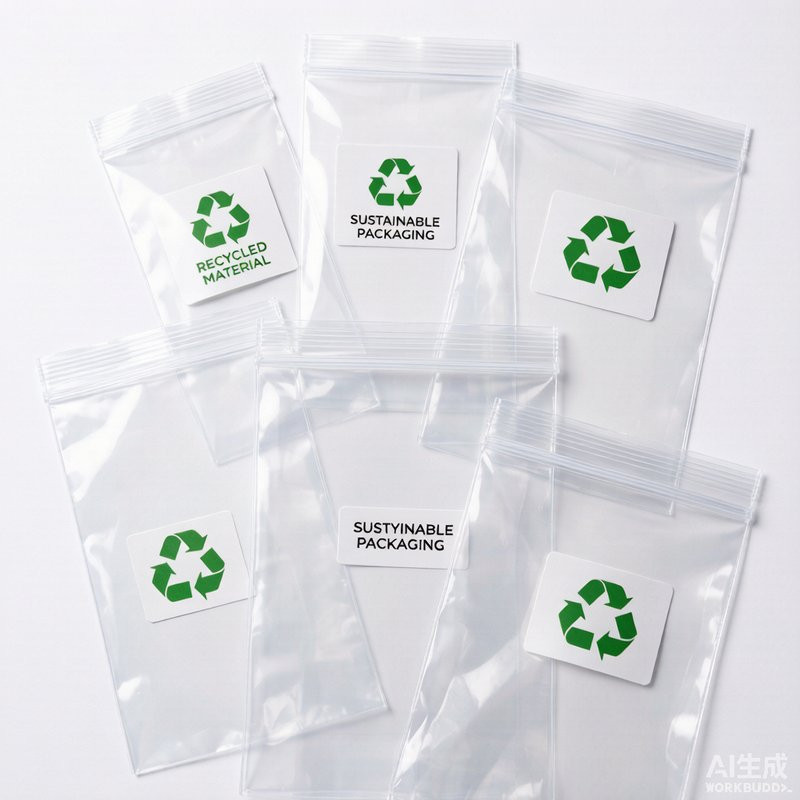
Several forces are converging to accelerate PCR adoption across the flexible packaging supply chain. The European Union's Packaging and Packaging Waste Regulation (PPWR), effective from August 2026, mandates minimum recycled content thresholds for plastic packaging placed on the EU market. In the United States, Extended Producer Responsibility (EPR) laws in states like California, Colorado, and Maine are creating financial incentives for brands to incorporate recycled materials. Major consumer goods companies — including Unilever, Nestlé, and Procter & Gamble — have made public commitments to reach 25-50% PCR content in their packaging portfolios by 2025-2030.
Technical Considerations for PCR in Flexible Packaging
Incorporating PCR resin into flexible packaging products such as self-sealing bags, ziplock bags, and flat pouches presents unique challenges. PCR materials can exhibit variability in melt flow index, color consistency, and mechanical strength compared to virgin resins. However, advances in sorting technology and purification processes have significantly improved PCR quality. Modern mechanical recycling lines using near-infrared (NIR) sorting can achieve purity levels exceeding 98%, making PCR suitable for many non-food-contact applications including industrial packaging, e-commerce mailers, trash bags, and cat litter bags.
What Buyers Should Look For
When sourcing PCR-content packaging, buyers should verify the following: (1) Third-party certification — look for recognized standards such as EuCertPlast, RecyClass, or the Global Recycled Standard (GRS). (2) Percentage claims — ensure the PCR content percentage is clearly stated and traceable through the supply chain. (3) Application suitability — confirm that the PCR grade is appropriate for the intended use, particularly for products requiring specific tensile strength, clarity, or seal integrity. (4) Regulatory compliance — verify that the material meets applicable food-contact or industrial standards in your target market.
The Bottom Line
PCR content is no longer optional for packaging manufacturers and buyers targeting environmentally conscious markets. For plastic bag and flexible packaging suppliers, developing PCR-capable production lines and obtaining recognized certifications is becoming a competitive necessity rather than a differentiator. Companies that invest early in PCR integration will be best positioned to meet both regulatory requirements and customer expectations in 2026 and beyond.
-

Aug 17,2026
Monomaterial Flexible Packaging Design: The Path to Truly Recyclable Plastic Bags
view more -
Aug 12,2026
Extended Producer Responsibility (EPR) for Plastic Packaging: A 2026 Compliance Roadmap for Flexible Packaging Manufacturers
view more -
Feb 15,2025
What should be noted when choosing PE high-pressure bags and low-pressure bags?
view more
-
Contact Us
 Learn moreTel: +86-15602809087 Water Yang
+86-15815931682 Helena He
-
Product Category
-
COMPANY
-
LET'S STAY IN TOUCH


