


Ziplock Bag Size Guide: How to Match Bag Dimensions, Lip Depth, and Fill Space to Your Product
Back to previous pageChoosing the right ziplock bag sounds simple until you receive a shipment where the zipper sits halfway down the filled bag, or a product that fits on paper but jams at the lip. Most sizing problems come from one misunderstanding: the size printed on a quote sheet is the bag's total width and length, not the space your product actually gets. This guide explains how a PE ziplock bag is measured, how much of it is really usable, and how to pick a size that works on your packing line.
What the Listed Size Actually Includes
A standard self-sealing bag is quoted as width x length, for example 100 x 150 mm. The width measurement includes the zipper lip assembly at the top of the bag. On most PE bags produced on a single-line extruder, the lip and hang hole area consume roughly 25 to 30 mm of that width. That means a 100 mm wide bag offers only about 70 to 75 mm of true fill width below the zipper. If you spec a bag by nominal size alone, you can easily end up one size too small.
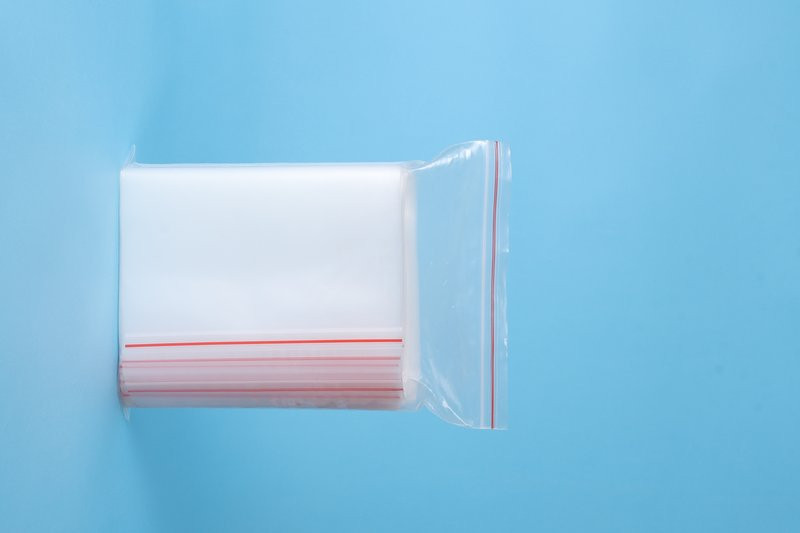
The bag length, by contrast, is measured to the base seal. When you fill a bag, bulky or rigid contents push the film outward, effectively shortening the usable length by 10 to 20 percent. Soft items like apparel tolerate this well; dense items like bolts, jars, or boxed goods do not.
A Practical Formula for Buyers
Before requesting a quotation, measure your product and apply two simple rules used across the flexible packaging industry:
- Width: add the lip allowance (25-30 mm) to your product's widest face, plus 5-10 mm of clearance for easy insertion.
- Length: multiply product height by 1.2 and add 20-30 mm for the bottom seal and fold-over.
For example, a product measuring 60 x 90 mm needs a bag around 95 x 140 mm, not a 70 x 100 mm bag. Buyers who skip this step often re-order within weeks at a larger size, doubling freight and customs handling per unit of packaging.
Standard Sizes Cover Most Applications
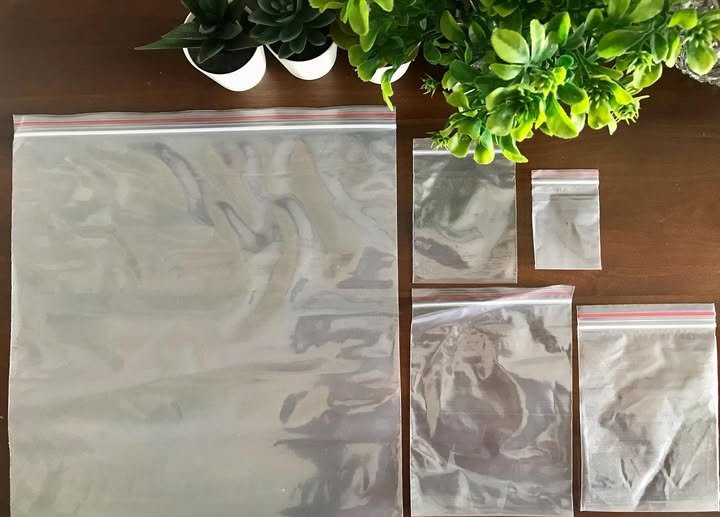
Most factories run a rolling set of standard sizes, from roughly 40 x 60 mm for jewelry and electronics accessories up to 400 x 500 mm and beyond for garments and industrial parts. Staying within a standard size range brings three practical advantages for small and mid-size buyers: lower unit cost, no tooling wait, and far smaller minimum order quantities. Custom widths are worth discussing when the product sits awkwardly between two standard sizes and volume is stable, because off-size bags generate off-cuts during conversion, which the buyer ultimately pays for.
Do Not Forget Thickness and Seal Performance
Size and thickness work together. A correctly sized bag in film that is too thin will split at the corners under the weight of dense contents, while an oversized bag in heavy film wastes material and looks loose on the shelf. For general retail and food storage, 50 to 60 micron (about 2 mil) PE is typical; hardware and heavier contents usually justify 70 to 80 micron. If you are unsure, ask your supplier to run a drop and seal-integrity check with your actual product before committing to a full production run.
Quick Reference: Common Product-to-Size Matches
- Jewelry, SIM cards, small electronics: 40 x 60 to 60 x 80 mm, 50 micron
- Snacks, dried food, hardware small parts: 80 x 120 to 100 x 150 mm, 60 micron
- Apparel, textiles, documents: 200 x 300 mm and up, 60-80 micron
- Industrial components and tools: 300 x 400 mm and up, 80-100 micron
Getting the size right the first time costs nothing but a few minutes with a ruler. Getting it wrong costs re-orders, air freight, and shelf stock that cannot be packed. Send your product dimensions to your bag manufacturer, confirm the usable fill space after the lip, and request a physical sample before each new size goes into production.
-
Feb 15,2025
What should be noted when choosing PE high-pressure bags and low-pressure bags?
view more -

Aug 24,2026
E-Commerce Flexible Packaging Market 2026: How Online Retail Growth Drives Self-Sealing Bag and Protective Mailer Demand
view more -

Aug 17,2026
Monomaterial Flexible Packaging Design: The Path to Truly Recyclable Plastic Bags
view more
-
Contact Us
 Learn moreTel: +86-15602809087 Water Yang
-
Product Category
-
COMPANY
-
LET'S STAY IN TOUCH


