


Clear Ziplock Bags for Apparel Packaging: Choosing Size, Thickness, and Closure Type for Garments
Back to previous pageApparel is one of the largest application areas for transparent PE packaging. Whether a brand ships a folded T-shirt to an online customer or supplies sportswear to a retail chain, the bag is the first thing the buyer touches and the last thing standing between the garment and dust, moisture, and handling damage. Getting the specification right is mostly a matter of three decisions: size, film thickness, and closure type.
Why clear PE ziplock bags dominate apparel packing
Three practical reasons keep transparent LDPE bags at the centre of garment packing. Visibility lets warehouse staff and customers confirm colour, size, and style without opening the pack, which shortens picking and reduces returns. A sealed bag protects against dust, humidity, and fingerprints during storage and transit. And compared with printed boxes or rigid retail packaging, a clear bag costs a fraction per unit while still allowing brand printing.

Matching bag size to the folded garment
Start from the folded pack, not from the flat garment. Measure folded length, folded width, and compressed height, then add roughly 10–15 mm to length and width so the garment slides in without stretching the film, plus 25–30 mm at the top for the zipper lip. A bag that is too tight causes stress whitening along the fold and splits at the seal; a bag that is too loose lets the garment slide, so it looks untidy on shelf and takes more shelf space.
Typical starting sizes
- Children’s T-shirt, 200 × 300 mm
- Adult T-shirt or shirt, 250 × 350 mm
- Hoodie or sweater, 300 × 400 mm
- Denim or jacket, 350 × 450 mm
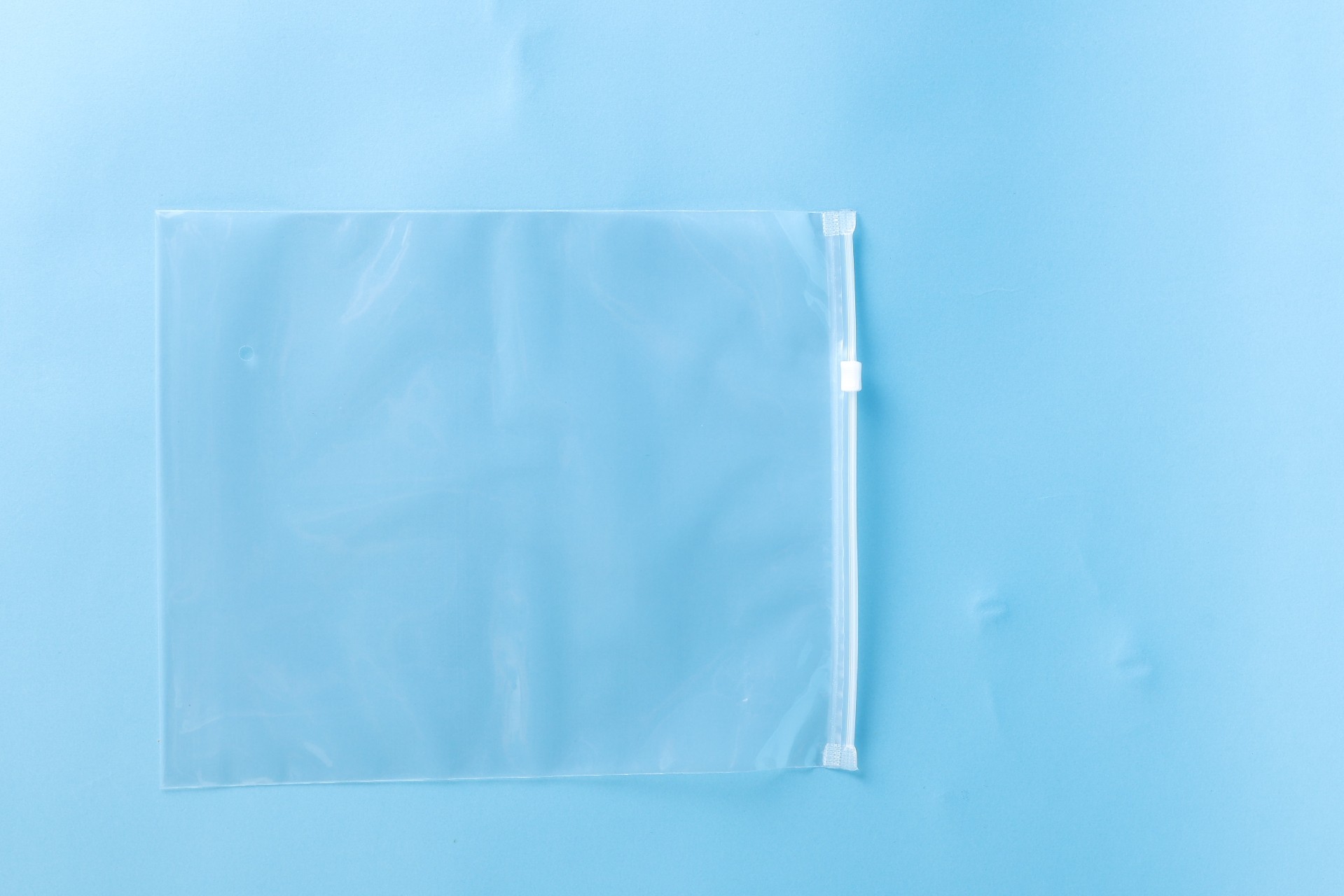
Film thickness: where 40 micron is enough
For light knitwear, socks, and accessories, 0.04–0.05 mm LDPE is sufficient and keeps freight cost low. Move to 0.06–0.08 mm for denim, jackets, and any item with buttons, snaps, or metal zippers that could puncture the film. Above 0.08 mm the bag becomes a reusable garment cover in its own right, which suits premium retail and resale programmes. Always confirm whether the quoted micron refers to a single wall or the total of both walls, and ask for the tolerance — ±5% is common.
Press-to-close track or slider zipper?
The standard press-to-close track is the cheapest option and the fastest to pack, which is why it remains the default for high-volume e-commerce. A slider zipper costs noticeably more per bag but can be closed one-handed and re-sealed after the customer opens it, so the garment stays protected during try-on and possible return. For heavy items such as winter coats, a double-track zipper gives a stronger, more forgiving seal than a single track.
Printing, venting, and hanger holes
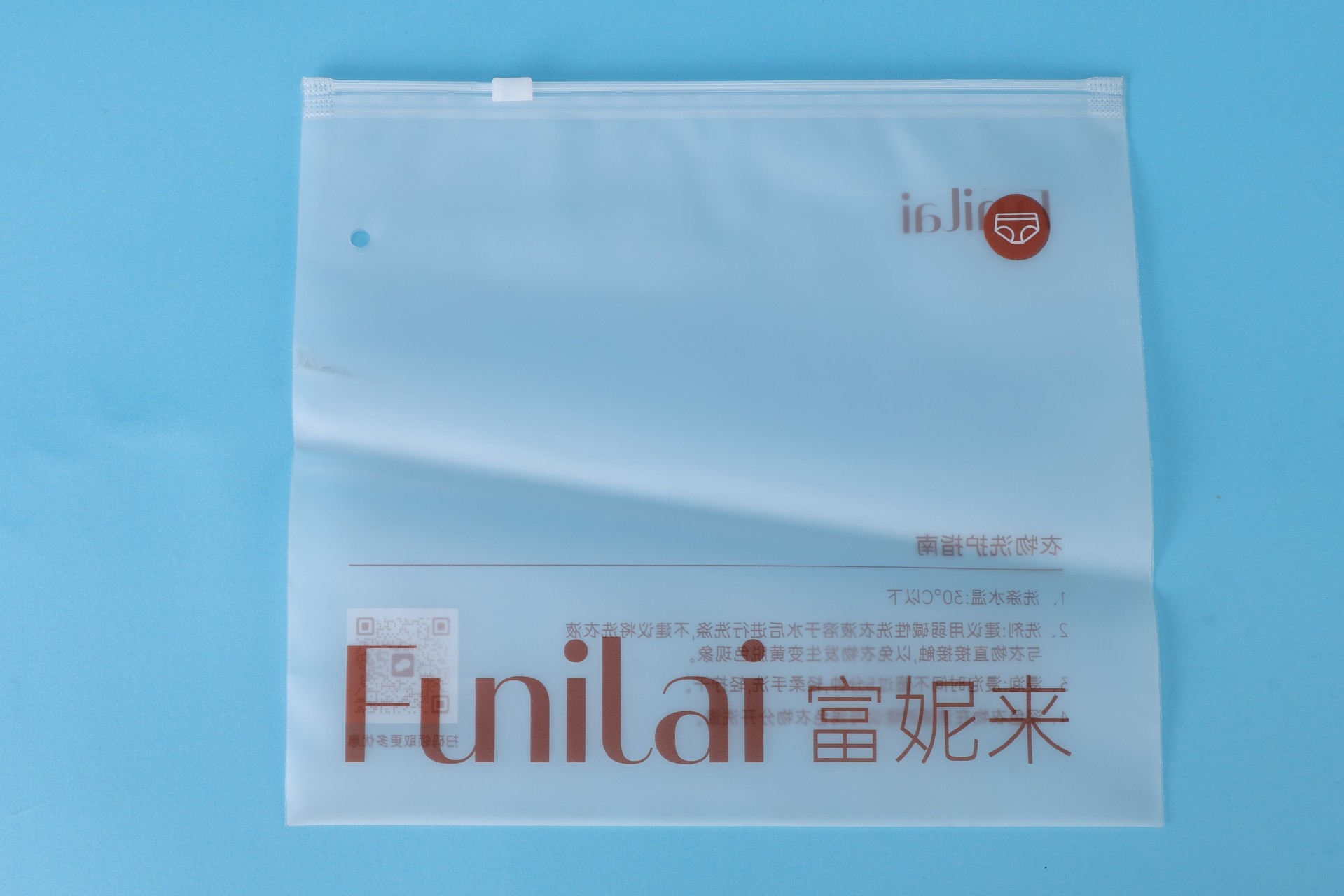
Most apparel bags carry one or two colours: a logo, a size field, or care text. Keep print away from the zipper track and the side seals, where ink interferes with sealing. Vent holes help in humid climates and sea freight, where trapped air condenses inside the bag; a euro slot or hanger hole lets retail partners hang the packed garment directly.
Ordering notes for small and mid-size brands
Custom sizes with one-colour printing usually start at 10,000 pieces per size with a 7–10 day production lead time, and several sizes can be packed into one carton to keep freight economical. Stock sizes ship in days rather than weeks, which is often the fastest way to cover a seasonal launch while custom bags are in production. Before committing to a full run, ask for a sample and pack your actual folded garment into it — a five-minute check prevents a season of badly fitting bags.
-
Oct 21,2026
PE Blown Film Extrusion Explained: How Resin, Blending, and Process Control Shape Self-Sealing Bag Quality
view more -

Jul 31,2026
Choosing the Right Resealable Bag: PE vs PP Material Comparison Guide
view more -
Aug 05,2026
Slider Zipper Bags in E-Commerce Fulfillment: Protecting Products from Warehouse to Doorstep
view more
-
Contact Us
 Learn moreTel: +86-15602809087 Water Yang
-
Product Category
-
COMPANY
-
LET'S STAY IN TOUCH


