

Plastic Bag Manufacturing Explained: From Film Extrusion to Zipper Seal Integration
Back to previous pageUnderstanding the Plastic Bag Manufacturing Process
The production of self-sealing bags, ziplock bags, and flat pouches involves a precise multi-stage manufacturing process that transforms raw polymer resin into finished, functional packaging. Each step — from film extrusion to zipper integration — directly impacts the final product's seal strength, clarity, and durability.
Step 1: Polymer Resin Selection and Preparation
Manufacturing begins with selecting the right polyethylene resin. Low-density polyethylene (LDPE) is the most common choice for flexible self-sealing bags due to its excellent transparency, flexibility, and food-safe properties. The resin pellets are dried and mixed with color masterbatch or additives such as anti-static agents before being fed into the extruder.
Step 2: Blown Film Extrusion
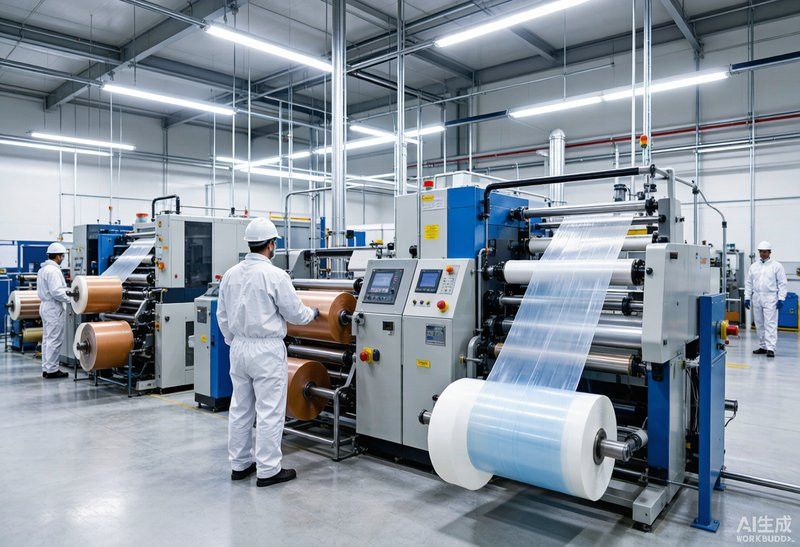
The prepared resin enters the extruder, where it is melted at temperatures between 160–220°C. The molten polymer is forced through a circular die, forming a continuous tubular film. Air pressure inflates the tube into a bubble, while a cooling ring solidifies the film. The bubble is then collapsed by guide rollers and wound onto rolls. This blown film process determines critical properties including thickness uniformity (typically 0.04–0.10 mm for self-sealing bags), tensile strength, and optical clarity.
Multi-Layer Co-Extrusion
For premium bags, manufacturers use ABA or A/B/C co-extrusion dies that produce multi-layer films. This allows different resin grades in each layer — for example, a strong outer layer combined with a soft, clingy inner layer for improved seal performance.
Step 3: Zipper Seal Integration
The defining feature of ziplock and self-sealing bags is the interlocking zipper profile. A separate extrusion process produces the male and female zipper strips, which are then heat-sealed onto the inner surface of the film at precise intervals. The zipper must align perfectly — even a 1 mm deviation can cause seal failure. Modern high-speed lines integrate zipper insertion inline, achieving production speeds of 150–300 bags per minute.
Step 4: Cutting, Sealing, and Finishing
The film roll passes through a cutting and sealing station where hot knives simultaneously cut and seal the bottom of each bag. For double-bone bags (double zipper), a second zipper strip is applied to the opposite edge. Edge trimming removes excess material, and a hang hole or write-on block may be punched at this stage.
Step 5: Quality Control Testing
Finished bags undergo rigorous QC testing:
- Seal strength test: Measured in N/15mm, minimum 15N for standard bags
- Thickness verification: Using digital micrometers at multiple points
- Zipper repeatability test: 50+ open-close cycles to verify interlocking integrity
- Tear resistance: Elmendorf tear testing per ASTM D1922
- Food-contact compliance: Migration testing per FDA 21 CFR or EU 10/2011
Conclusion
Understanding the manufacturing process — from resin selection through film extrusion, zipper integration, and quality control — helps buyers evaluate supplier capabilities and make informed packaging decisions. At YDF Plastics, our production lines combine advanced co-extrusion technology with stringent QC protocols to deliver consistently high-quality self-sealing bags, flat pouches, and specialty packaging for global markets.
-
Jul 31,2026
Global Flexible Packaging Market 2026: Growth Drivers, Sustainability Shifts, and Regional Demand
view more -
Sep 04,2023
What is a PE bag?
view more -
Sep 22,2025
The difference between integrating packaging materials into daily life and using non edible packaging bags to pack food
view more
-
Contact Us
 Learn moreTel: +86-15602809087 Water Yang
+86-15815931682 Helena He
-
Product Category
-
COMPANY
-
LET'S STAY IN TOUCH


