


Anti-Static Shielding Bags for Electronics Manufacturing: ESD Protection Standards and Material Choices
Back to previous pageWhy Electrostatic Discharge Demands More Than a Regular Polyethylene Bag
Static electricity is invisible until it damages a component. A single discharge of just 30 volts can corrupt a modern integrated circuit, while the human threshold for feeling static is closer to 3,500 volts. Inside an electronics assembly line, finished PCBs, IC chips, and connector modules handle hundreds of touchpoints before they reach the end user, which is why anti-static shielding bags are not a packaging upgrade but a baseline requirement for any ISO 9001 or IATF 16949 certified facility.
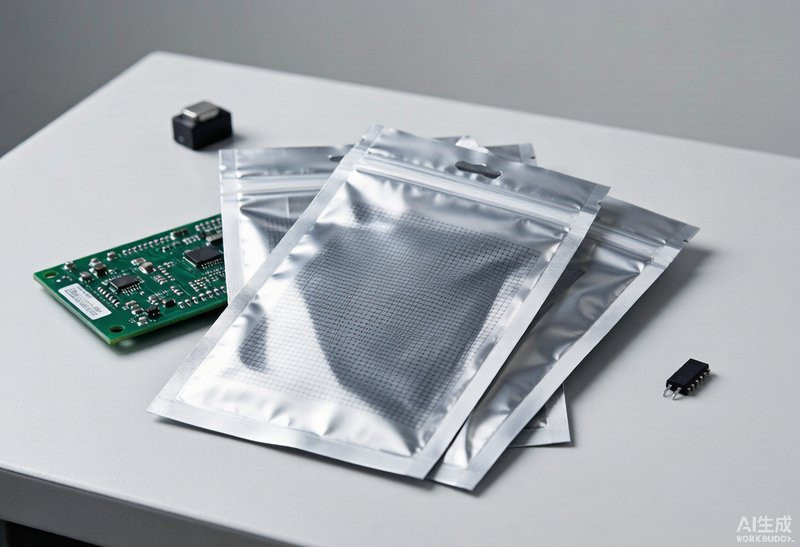
Three Functional Layers in a Typical ESD Bag
A standard shielding bag is a multi-layer laminate, not a single film. From the outside in, most bags combine:
- Static-dissipative outer layer (typically 10^9 to 10^10 ohms) so the surface charge bleeds away safely instead of holding a spark.
- Aluminum metallized polyester shield (the silver-grey sheen) that blocks external electromagnetic interference and surrounds the contents in a Faraday cage.
- Static-dissipative inner layer (LDPE or LLDPE based) that contacts the component without tribocharging it during packing.
Together these layers deliver a surface resistivity around 10^11 ohms per square, well inside the ANSI/ESD S541 packaging standard for ESD-sensitive items.
Compliance Standards Worth Knowing
Buyers in the contract-manufacturing space usually ask for evidence of conformance before approving a supplier. The most cited references are:
- ANSI/ESD S541 — packaging materials for ESD-sensitive components, covering moisture barrier bags, shielding bags, and dissipative pink foam.
- IEC 61340-5-1 — international electrostatic control program, including packaging as one element of an EPA (ESD Protected Area).
- MIL-PRF-81705 Type III — historically the military barrier-bag reference, often still required for aerospace and defense shipments.
- RoHS and REACH — chemical compliance unrelated to ESD, but commonly bundled into the same audit so the metalized layer and adhesives stay free of restricted substances.
For moisture-sensitive components such as BGAs and QFNs, ESD bags are usually paired with desiccant sachets and humidity indicator cards inside a moisture barrier bag that meets IPC/JEDEC J-STD-033.
Choosing the Right Format for Your Line
Stand-up pouches work well for single-board packaging in retail e-commerce, while flat shield bags dominate SMT line side-cartons. For repeated access during rework, anti-static zip lock bags allow technicians to reseal the bag between board swap-outs without losing Faraday protection. If a finished unit ships with a warranty card, choose bags with a resealable adhesive strip so the customer can keep the bag for any future return shipments.
Final Sourcing Tips
Request the supplier's ASTM D257 surface-resistivity report with every shipment, and verify the metallized layer remains intact after a 60 °C heat-aging cycle of 24 hours. A reliable shielding bag will keep its shielding performance after flexing, dropping from one meter, and exposure to typical warehouse humidity. Cheap constructions tend to fail on the seam first, so always inspect the heat seal before approving a production lot.


-
Contact Us
 Learn moreTel: +86-15602809087 Water Yang
+86-15815931682 Helena He
-
Product Category
-
COMPANY
-
LET'S STAY IN TOUCH


